electronics liquidation pallets

$2,444.00
This electronic pallet liquidation Gaylord holds unmanifested Amazon fulfillment center customer returns spanning electronics, toys, bedding, and general merchandise. No itemized manifest or declared MSRP is provided. Built for distribution-level buyers who sort by category and move volume downstream rather than list single items, minimum order is one pallet, shipped from our Ontario warehouse to Canada and the United States.
Electronic Pallet Liquidation Gaylord – Buy Online at LiquidationStockPallets.ca
Buyers looking for electronic pallet liquidation stock at a distribution scale need two things from a supplier: a reliable weekly intake from a verified direct source, and enough margin per unit to make the sorting, logistics, and downstream costs actually pencil out. That is what this Gaylord is built around. LiquidationStockPallets.ca sources directly from major retail and e-commerce return channels, so the markup that would otherwise sit between you and the source never gets added to your cost before you have handled a single item.
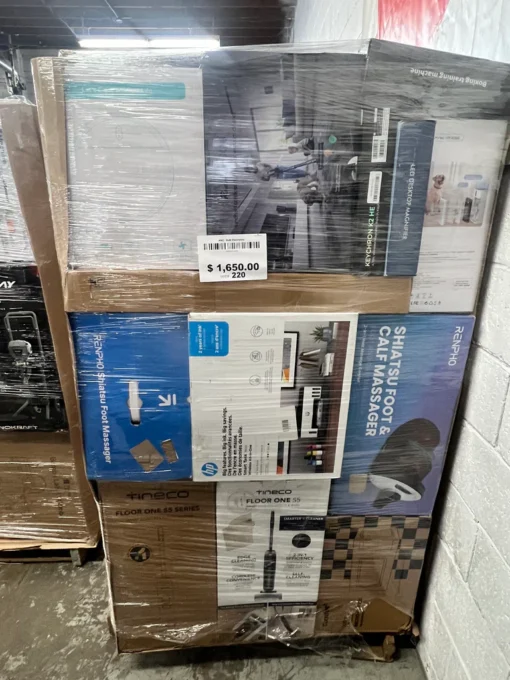
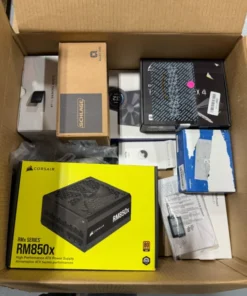
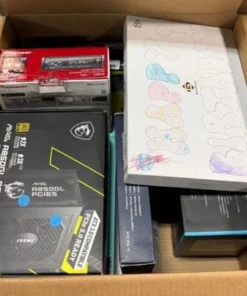
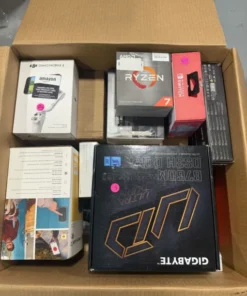
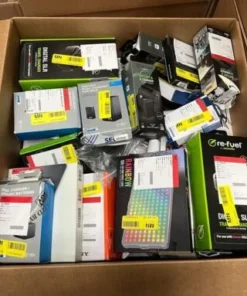
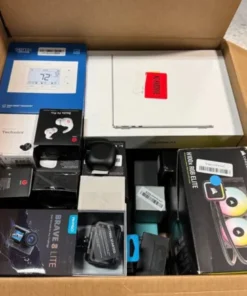
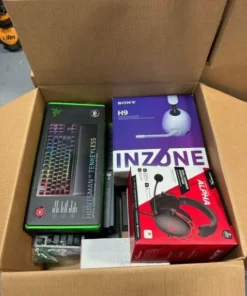
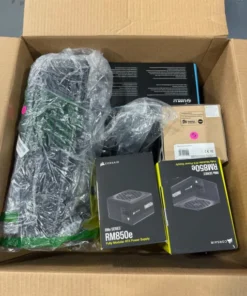
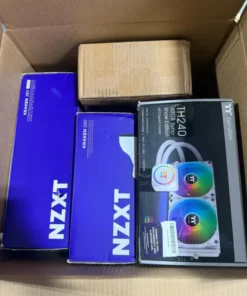
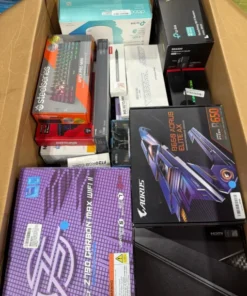
This high-count Gaylord stands roughly six to seven feet tall and holds mixed general merchandise pulled from Amazon fulfillment center returns: electronics, toys, bedding, and other general categories. No manifest is included. No total MSRP is declared. Item count is not specified. The product photos for this specific pallet are your primary reference for what it actually contains, and they should be reviewed closely before you buy.
This is an as-is purchase. No exchanges or returns are accepted once the pallet has been delivered. It suits distribution-level buyers who sort by category and move lots downstream, high-volume online resellers who need a steady incoming stream, auction operators building catalog volume, and export traders sourcing for container loads. It is not a fit for buyers who have never handled high-count, unmanifested return stock before.
Online ordering only. Delivery available on request at additional cost. Minimum order quantity is one Gaylord pallet. Product category: unmanifested general merchandise. Stock origin: Amazon fulfillment center returns, shipped from our warehouse in Ontario.
What does electronic pallet liquidation mean?
Buying at the distribution level means operating between the direct liquidation source and the final reseller or retail buyer. A distribution-level buyer acquires Gaylord pallets in volume, sorts the contents by category, and passes sorted lots to downstream specialist buyers instead of listing every item individually on consumer platforms. Margin gets captured at the sorting and distribution stage rather than at the point of individual sale.
That is a different game from item-by-item reselling. A distribution buyer does not need to know what a particular gaming headset sells for on eBay.ca or what conversion rate a specific bedding brand gets on Facebook Marketplace. What matters is knowing which categories show up in Amazon FC Gaylords and roughly how often, what sorted category lots are worth to downstream buyers, and what sorting and logistics costs sit between acquiring the pallet and selling the sorted lots. That knowledge, combined with a direct-import sourcing position that removes the middleman markup, is what makes the distribution model work.
Who this pallet is for
Wholesale distributors running a sort-and-distribute model with several downstream specialist buyers. A distributor with separate buyers for electronics, toys, home goods, and bedding can acquire a single Gaylord and generate four separate distribution sales from one purchase, each going to a buyer who knows how to extract value from that category.
Export traders sourcing container loads of mixed Amazon FC return merchandise for secondary retail markets. The general merchandise mix, electronics, toys, bedding, and more, fits secondary retail channels where category variety at an accessible price drives wholesale demand.
High-volume online resellers running multi-category accounts across eBay.ca, eBay.com, Amazon.ca, Amazon.com, and Facebook Marketplace, who need a regular weekly intake feeding every platform without sourcing separately by category.
Auction operators who need a steady mixed inventory volume to keep catalog density up for weekly or biweekly sale cycles. A high-count Gaylord provides enough individual lots per pallet to stock several sale sessions from one purchase.
Discount or clearance store operators able to sort and display the Gaylord contents on their existing sales floor with their existing team.
Small business owners and B2B buyers with established downstream reseller relationships who can distribute different categories to different specialist buyers, capturing sorting value without needing item-level resale expertise.
This format is not recommended for buyers without prior experience managing high-count, unmanifested return stock. First-time buyers are typically better served by a manifested pallet with item-level detail.
How liquidation pallets work
Retailers and e-commerce platforms deal with a constant stream of overstock, discontinued lines, and customer returns that cannot go back on their own shelves. That stock gets consolidated and sold off in bulk, often as full pallets or Gaylord containers, to wholesale buyers rather than trickled out one item at a time. The retailer clears warehouse space and recovers some value quickly; the wholesale buyer picks up merchandise well below original retail pricing in exchange for taking on the sorting, grading, and resale work themselves.
For a reseller or distributor, that trade-off is the entire business model. You are paying for volume and category variety rather than certainty on any single item. The margin exists because the retailer prioritizes fast, bulk disposal over maximizing per-unit recovery, and a buyer willing to do the sorting captures the gap between the bulk price and what sorted, graded merchandise is actually worth to the next buyer in the chain.
How Amazon FC returns are graded
All items in this Gaylord are customer returns sold as-is. Condition ranges from new and sealed, through like new in original packaging, used and functional with cosmetic wear, damaged, and missing parts or accessories, down to a percentage of stock that is not resellable.
Each condition tier calls for a different approach. New and like-new items carry the highest resale or distribution value. Used, functional items with honest condition disclosure sell reliably at a competitive price point. Damaged or incomplete items still carry parts or repair value. Unsellable items need a disposal plan built into your margin from the start rather than treated as a surprise.
Because this pallet carries no item-level manifest, condition breakdown across categories is not guaranteed to match any typical ratio. Review all available product photos before purchase, since they are your main source of information on this specific pallet’s actual composition.
What’s in this pallet
This electronic pallet liquidation Gaylord is not itemized. No manifest and no total MSRP are provided for this lot. The pallet is described as mixed general merchandise from the Amazon fulfillment center return stream, including electronics, toys, bedding, and other general categories.
Mainstream consumer brands appear in Amazon FC Gaylords at rates that reflect actual consumer buying behavior across the platform’s catalog, since this stock originates from real customer purchases rather than a curated wholesale assortment. That brand presence is part of what allows sorted category lots to command a premium with downstream specialist buyers compared to unbranded generic wholesale stock. Specific brand names and item counts are not listed for this pallet, since none were supplied with this lot.
Estimated resale and distribution potential
No manifest or total MSRP is declared for this lot, so the figures below reflect typical outcomes reported for high-count, mixed Amazon FC Gaylords bought at the distribution level rather than figures specific to this pallet.
| Distribution scenario | Gross return relative to purchase price |
|---|---|
| Conservative (30 to 40 percent functional, basic sorting) | 1.5x to 2x purchase price |
| Moderate (60 to 70 percent functional, category sorting and distribution) | 2x to 3x purchase price |
| Optimistic (80 percent plus functional, specialized category channels) | 3x to 4x plus purchase price |
Buyers who already have downstream specialist buyers lined up for each category tend to land in the moderate to optimistic range, since they capture both the direct-sourcing margin and the category-sorting premium without carrying the overhead of item-by-item listing.
These figures are not guaranteed. Actual results depend on item composition, functional rate, sorting efficiency, downstream buyer relationships, and execution.
Real profit examples
Conservative: a buyer with limited downstream relationships sorts the pallet into broad categories and moves most of it through general clearance channels at a modest markup, landing near the 1.5x to 2x range once sorting time and freight are factored in.
Moderate: a buyer with two or three active category buyers, say electronics and toys, sorts and distributes those categories at a premium while routing the remainder through Facebook Marketplace or Kijiji as a secondary channel, landing in the 2x to 3x range.
Optimistic: a buyer with established specialist relationships across most categories in the pallet, plus fast turnaround between acquisition and distribution, captures a premium on nearly every sorted lot and lands at 3x or higher.
These are market estimates built on general patterns in the liquidation trade, not a guarantee. Sorting speed, functional rate, and how quickly you can move sorted lots to a buyer all affect where an individual pallet lands.
Why this pallet is profitable for resellers in Canada and the US
The direct-sourcing position removes a layer of markup that would otherwise sit between you and the source. The Amazon FC origin is verifiable and consistent, which supports pricing conversations with downstream buyers who care about provenance. The general merchandise mix means a single pallet can generate several separate distribution sales at once, one per category, rather than a single sale. And a supplier able to restock weekly supports a predictable buying schedule instead of reactive, one-off sourcing.
Scale smarter, not just bigger
The risk most distribution buyers underestimate is sorting speed relative to capital cycle. A Gaylord that sits unsorted for three weeks ties up capital that should already be generating revenue through downstream sales. Buyers who sort fast and distribute fast keep their capital moving. Buyers who let sorted lots pile up without active downstream relationships find that the category premium they expected never shows up, because there is no buyer ready for the sorted lot when it is ready to move.
Build your downstream buyer relationships before you scale your Gaylord purchase volume. Adding more pallets without a place to send the sorted output does not increase margin, it just increases the amount of unsorted inventory sitting in your warehouse.
Electronic pallet liquidation versus other wholesale sourcing formats
| Criteria | Electronic pallet liquidation (this Gaylord) | Manifested electronics pallets | Generic mixed wholesale lots |
|---|---|---|---|
| Sourcing origin | Direct import, Amazon fulfillment centers | Direct import, Amazon fulfillment centers | Mixed, often unclear |
| Manifest available | No | Full, item level | Rarely |
| Brand quality | Mainstream consumer brands | Mainstream to premium | Variable |
| Fit for distribution model | High, category sorting to multiple buyers | Moderate, item-focused | Low |
| Per-unit acquisition cost | Lower at volume | Reflects known item value | Variable |
| Category sorting opportunity | High, several downstream buyers | Limited | Moderate |
| Export suitability | High | Moderate | Low to moderate |
| Weekly restock | Yes | Subject to availability | Variable |
| Volume economies of scale | Strong across multi-pallet orders | Limited | Moderate |
Where to resell sorted lots from this pallet
Electronics lots sorted from this Gaylord and passed to specialist electronics resellers command the highest category premiums. Resellers who receive sorted lots from a verified Amazon FC source can test, list, and sell with confidence in the brand quality of the stock, particularly on eBay.ca, eBay.com, Amazon.ca, and Amazon.com.
Toy and game lots, particularly branded or licensed items, place well with specialist toy resellers, auction operators, and retail store buyers. Category-bundled lots move faster than item-by-item listing for this category.
Bedding and home textiles sorted from the Gaylord suit retail store buyers who can display and sell directly to consumers without individual listing overhead. Facebook Marketplace and Kijiji also work as direct channels for this category when new or like-new items in original packaging are present.
General home goods, kitchenware, small personal care items, and miscellaneous merchandise sorted into a general lot suit auction operators, discount retail buyers, and export channels able to absorb variety without category specialization.
Damaged or incomplete items across any category find a recovery channel through parts sales on eBay.ca and eBay.com, and through direct sale to repair operators and refurbishers sourcing damaged stock for component recovery.
For export traders, the general merchandise mix suits container-load distribution to secondary retail markets without needing category separation at the source, since destination-market buyers often prefer variety over category purity in mixed container loads.
Is this pallet worth buying
For a buyer operating a distribution model with downstream specialist buyers already in place, yes. The direct-sourcing position, the Amazon FC origin of the stock, the category variety that allows several distribution sales from one Gaylord, and a weekly restock cycle that supports predictable buying all add up to a commercially sound sourcing choice for distribution-level operators.
How distribution-level buyers grow their business
Growth here tracks the downstream buyer network. You grow by adding specialist buyers for more categories, which lets you distribute a larger share of each Gaylord’s contents at premium pricing instead of selling leftover unsorted lots at a discount. You grow your weekly incoming Gaylord volume as your sorting capacity and downstream network expand. And you grow your sorting speed, which shortens the gap between acquisition and distribution sale and frees up capital tied up in unsorted inventory.
Distribution operations versus item-by-item reselling
Item-by-item reselling is a high-touch, high-margin-per-item model. Every item gets tested, listed, and sold individually. Margin per dollar of revenue is solid, but so is time invested per dollar, and the model does not scale efficiently past a certain processing capacity.
Distribution-level operations are low-touch, high-volume. Items get sorted by category rather than evaluated individually. Value gets captured at the category-distribution stage rather than the individual listing stage. The model scales with sorting capacity and the size of your downstream buyer network rather than individual listing throughput. Margin per item is lower, but revenue per hour of operating time is higher once you hit sufficient volume.
Most successful large-scale liquidation operations run both models together, listing high-value items identified during sorting individually while distributing lower-value category lots to wholesale buyers. The Gaylord format accommodates both approaches within a single purchase.
Is this pallet a fit for your business
The test is simple. Do you have active downstream buyers for at least two of the main categories likely to show up in an Amazon FC general merchandise Gaylord? If so, this pallet generates distribution revenue from those categories as soon as sorting is done. Remaining categories go to additional downstream buyers you develop over time, or to individual listing on consumer platforms as a secondary revenue stream.
If you do not yet have downstream buyers in any category, this pallet format requires building those relationships before the Gaylord arrives, or falling back on individual listing of the full lot, which remains viable but gives up the distribution-level efficiency that makes the high-count format commercially stronger at scale.
Why boring stock is the backbone of a good operation
At the distribution level, unremarkable items make up the backbone of the business. Generic bedding sets, basic functional electronics accessories, unbranded home goods, five-dollar kitchen items. None of it generates excitement on its own. Together, sorted into category lots, it is the steady downstream revenue that funds your weekly Gaylord purchases, your sorting team’s time, and your logistics costs.
High-value finds, sealed electronics, like-new branded toys, premium audio items, are real and generate disproportionate revenue. They are not the operational foundation, though. The predictable, boring categories are. A distribution model built around the hope of exciting finds is an unreliable business. A distribution model built around efficiently moving predictable, boring categories to specialist buyers who know how to extract their value is a durable one.
Why buy from LiquidationStockPallets.ca
LiquidationStockPallets.ca sources directly from major retail and e-commerce return channels every week. That weekly direct-import cycle gives distribution-level buyers a consistent, predictable incoming schedule, without a middleman markup compressing the distribution spread. The goal is the same one that makes distribution businesses work: give buyers enough margin to build a real operation, because buyers who build real operations keep buying.
Beyond electronic pallet liquidation Gaylords, we also carry Customer Return Pallets and Mixed Merchandise Pallets for buyers building out a broader category mix, along with Overstock Pallets for buyers who want a higher functional rate than typical return stock.
Online only. No warehouse visits. No local pickup except for full truckload orders, which can be arranged directly with our logistics team. Delivery is available on request at additional cost.
Shipping across Canada and the United States
Shipping is handled from our Ontario warehouse by a dedicated pallet freight carrier, with tracking included on every order. Delivery times within Canada are generally shorter than delivery to the United States. Orders shipping to the United States are subject to customs clearance and any applicable duties or import taxes, which are the buyer’s responsibility.
For container-load or full truckload orders, freight is coordinated through specialized pallet and container carriers. Contact us directly at sales@liquidationstockpallets.ca to discuss logistics and pricing before placing your order.
Delivery for an individual pallet can be arranged on request, at an additional cost.
Online-only sales
LiquidationStockPallets.ca operates online only. There is no local pickup or warehouse visit option for individual pallet orders. The sole exception is full truckload or multi-truckload orders, where pickup can be discussed directly with our logistics team by contacting sales@liquidationstockpallets.ca before placing your order.
Return policy
This pallet is sold as-is. No exchanges or returns are accepted after delivery, given the unmanifested nature and inherent condition variability of this stock format.
Frequently asked questions
What does electronic pallet liquidation mean? It refers to buying Gaylord pallets of Amazon returns at a volume and scale suited to wholesale distribution rather than item-by-item reselling. Distribution-level buyers sort the contents by category and sell sorted lots to downstream specialist buyers, capturing margin at the sorting and distribution stage.
How does the distribution model differ from reselling items one by one? Individual reselling means testing, listing, and selling each item separately on consumer platforms. Distribution means sorting by category and selling category lots to specialist buyers without individual listing. Distribution needs less per-item effort and more volume, and scales with your downstream buyer network rather than listing throughput.
What is inside this pallet? Mixed general merchandise from the Amazon fulfillment center return stream, including electronics, toys, bedding, and more. No manifest is provided. Item count and total MSRP are unknown. Condition ranges from new to unsellable, including like new, used, damaged, and missing parts.
Is there a manifest or itemized list for this pallet? No. This Gaylord is sold unmanifested with no item-level list or declared MSRP. Product photos for this specific pallet are your primary reference for what it contains.
Can I return or exchange this pallet after delivery? No. This pallet is sold as-is. No exchanges or returns are accepted once it has been delivered, due to the unmanifested and condition-variable nature of this stock format.
Is shipping available for this pallet? Yes, on request at an additional cost. Contact sales@liquidationstockpallets.ca to arrange delivery.
Does this pallet work for export or container-load buyers? Yes. The general merchandise mix suits container-load distribution to secondary retail markets. Contact us to discuss container pricing and logistics before ordering.
Where can I resell the sorted lots from this pallet? Electronics lots to specialist resellers or directly on eBay.ca and Amazon.ca. Toy lots to specialist resellers or auction operators. Bedding and home goods to retail buyers or Facebook Marketplace and Kijiji. Export lots to secondary-market distribution buyers. The right channel depends on category and condition.
Do you ship to the United States? Yes. Customs clearance and any applicable duties or taxes on US-bound orders are the buyer’s responsibility.
What is the minimum order quantity? One Gaylord pallet.
Can I buy multiple pallets or a full truckload? Yes. Contact sales@liquidationstockpallets.ca for multi-pallet and full truckload pricing.
Is this pallet suitable for a first-time liquidation buyer? It is not recommended. This unmanifested, high-count format and the distribution-level economics behind it call for prior experience sorting Amazon FC return stock and managing downstream buyer relationships. Contact us to discuss formats better suited to a starting point.
Is local pickup available at your Ontario location? No, except for full truckload or multi-truckload orders, which can be arranged directly with our logistics team by contacting sales@liquidationstockpallets.ca before ordering.
Legal disclaimer
All items are sold as customer returns in as-is condition and have not been individually tested. Condition, completeness, and functionality may vary by item, ranging from new to unsellable. No manifest or total MSRP is provided for this lot. Item composition is based solely on the stated category description and available product photos. Estimated resale and distribution ranges are general indicative figures based on observed market patterns and do not constitute a guarantee of profit or return on investment. No exchanges or refunds are accepted after delivery. The buyer is responsible for independently testing each item prior to resale or distribution.
LiquidationStockPallets.ca
sales@liquidationstockpallets.ca
724 Caledonia Rd, The Nation, ON K0B 1N0, Canada
Be the first to review “electronics liquidation pallets”
Related products
amazon electronic liquidation pallets
amazon electronic liquidation pallets
amazon electronic liquidation pallets
amazon electronic liquidation pallets
amazon electronic liquidation pallets
amazon electronic liquidation pallets
amazon electronic liquidation pallets
amazon electronic liquidation pallets
Reviews
There are no reviews yet.