General Merchandise Pallets | liquidationstockpallets.ca
General merchandise pallets are mixed liquidation lots pulled from multiple product categories at once instead of a single department, which is what separates them from an electronics pallet or an apparel pallet. A reseller who buys general merchandise pallets is buying variety on purpose, spreading purchase risk across housewares, seasonal goods, toys, personal care items, small home goods, and general retail overstock rather than betting the whole lot on one category’s resale demand. liquidationstockpallets.ca stocks general merchandise pallets for buyers across every Canadian province and territory, with fulfillment available into the United States. Orders are placed and processed entirely online.
What Is a General Merchandise Pallet
A general merchandise pallet is a single wholesale lot built from assorted retail stock rather than one product type. The contents are not curated around a theme. A retailer or liquidator consolidates whatever excess or returned inventory is moving through the warehouse at the time, and the resulting pallet reflects that mix. This is the defining trait of general merchandise as a category in the liquidation trade, and it is also why buyers approach it differently than they approach a specialized lot. A general merchandise pallet is bought for its overall value and sell-through potential across many small listings, not for one flagship item.
Because the category spans so many product types, condition within a single pallet can vary from item to item. Some units may be unopened overstock, others may be customer returns, and the balance between the two depends on the specific lot. This is standard practice across the liquidation industry and is not unique to any one supplier. Buyers who understand this going in are better positioned to price and sort inventory efficiently once it arrives.
Who General Merchandise Pallets Are For
General merchandise pallets suit buyers who want breadth over specialization. A flea market vendor benefits from a table that changes week to week rather than one that only ever holds the same category. A bin store owner depends on constant variety to keep customers coming back and digging through stock, which is the entire draw of the bin store model. A thrift store owner filling shelves across multiple departments gets more usable inventory per dollar from a mixed lot than from a single-category pallet. An online seller running a general storefront on a marketplace, rather than a niche shop, can list across several categories from one purchase instead of sourcing separately for each.
Small business owners just starting in resale often begin with general merchandise pallets for the same reason: it lets them test which categories move fastest for their specific customer base before committing purchase budget to a narrower product type. A reseller working multiple channels at once, such as a Facebook Marketplace storefront alongside an Amazon or eBay account, can also split a single general merchandise pallet across several platforms based on what sells best where.
How Liquidation Pallets Work
Retailers routinely end up with more stock than they can move at full price. Overstock builds up when orders exceed actual demand, seasonal product cycles end, packaging changes, or a product line gets discontinued. Separately, customer returns accumulate as a normal part of running an e-commerce or retail operation, since return policies mean a share of sold units come back regardless of whether the product itself was faulty. Rather than warehousing this stock indefinitely or destroying it, retailers move it out through the liquidation channel.
That inventory gets consolidated into pallets and sold at wholesale to liquidators and resellers at a fraction of original retail value. The retailer recovers some value on stock that would otherwise sit unsold or be scrapped, and the buyer gains access to inventory below wholesale cost in exchange for taking on the sorting, grading, and resale work themselves. This is the basic mechanic behind every liquidation pallet in the market, including general merchandise lots, and it is why liquidation pricing sits well under normal wholesale terms. The value to a reseller comes from that spread between acquisition cost and realistic resale price once the stock is sorted, listed, and sold individually or in bundles.
How Returns Are Graded
Liquidation stock is typically grouped into a small number of condition categories, and general merchandise pallets can include a mix of these depending on the lot. New or overstock stock has never been opened or used and is unsold retail inventory rather than a return. Shelf-pull stock has been handled or displayed in a retail environment but was never purchased by a customer. Customer return stock has been purchased and sent back, and condition on returns ranges from unused to visibly used to non-functional, since return reasons vary from a simple change of mind to an actual product defect. Salvage or damaged stock refers to units with visible cosmetic or functional damage.
liquidationstockpallets.ca does not apply grading language beyond what a specific lot’s listing actually states for that lot. General merchandise pallets are sold on the understanding that mixed-condition stock is the nature of the category, and buyers should expect to sort and test items after delivery rather than assume every unit is sale-ready out of the box. Buyers who want a more predictable condition tier rather than a mixed grade spread can look at Customer Return Pallets or Overstock Pallets instead, where the condition profile runs narrower by design.
What Is Typically Inside a General Merchandise Pallet
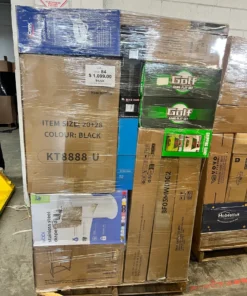
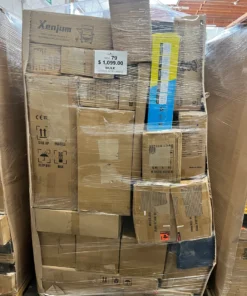
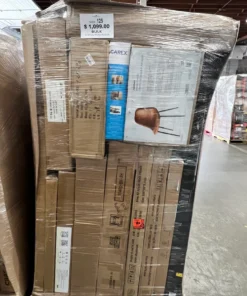
Because the category is defined by variety rather than a single product line, contents shift from lot to lot. A general merchandise pallet can draw from housewares, small home goods, seasonal and holiday stock, toys, personal care and grooming products, general accessories, and other everyday retail categories. This is what makes general merchandise pallets useful for a reseller building broad inventory rather than a specialist store, and it is also why buyers should expect to sort stock into sellable categories after arrival rather than receive a pre-sorted shipment.
Estimated Retail Value
Value on a general merchandise pallet is assessed the same way it is across the liquidation trade, by comparing the wholesale purchase price against the combined original retail pricing of the items in the lot, then against what those items can realistically be resold for individually once sorted and listed. Because general merchandise spans many product types with different retail price points, per-item value on a mixed pallet tends to run lower on average than a specialized electronics or appliance pallet, but the trade-off is broader sell-through potential across more listings and platforms. Buyers should treat any manifest or listed retail value figure as a reference point for the original pricing of the goods, not as a guarantee of resale price, since resale value depends on condition, market demand at the time of sale, and the platform used.
Profit Potential and Reseller Margins
Margin on general merchandise pallets comes from the gap between what a reseller pays for the pallet and what the sorted stock brings in once listed individually across the categories it contains. Because the lot spans multiple product types, total return on a general merchandise pallet is typically the sum of many smaller individual sales rather than a few high-value ones, which is different from how margin builds on a specialized electronics or appliance lot. This spread-out sales pattern can smooth out risk, since a slow-moving item in one category does not sink the whole lot the way it might in a single-category pallet, but it also means turning a general merchandise pallet into profit takes more individual listings and more hands-on sorting time than a narrower lot.
Actual results depend on the specific contents of a given lot, the condition mix within it, the reseller’s sourcing costs beyond the pallet itself such as shipping and listing fees, and current demand on the platforms used to resell. liquidationstockpallets.ca does not guarantee any specific resale outcome or profit figure on general merchandise pallets or any other lot, and buyers should treat liquidation resale as a business activity with real risk rather than a guaranteed return.
Why General Merchandise Pallets Are Profitable for Resellers in Canada and the US
The core advantage of general merchandise pallets is diversification. A reseller is not dependent on demand for one product category holding steady, since a mixed lot spreads exposure across several categories at once. Entry cost per pallet is also typically lower than a lot built entirely from a single high-value category, which makes general merchandise a practical starting point for a small business owner building resale experience before scaling into more specialized inventory. The broad category mix also suits sellers running general storefronts on Facebook Marketplace, Kijiji, or a general marketplace account, where customers expect variety rather than a narrow niche. For buyers on the US side of the border, the same logic applies, with general merchandise sold well through OfferUp, Craigslist, and general marketplace listings that mirror how Canadian sellers use Facebook Marketplace and Kijiji.
Scale Smarter, Not Just Bigger
The instinct for a growing reseller is to keep buying more volume, but volume without margin discipline erodes profitability fast, especially with general merchandise where per-item value is already modest. A buyer who tracks actual sell-through rate by category learns which segments of a general merchandise pallet move quickly on their preferred platforms and which segments sit. That data should guide future purchases toward pallets weighted more heavily in the categories that actually convert for that specific seller, rather than buying the same generic mix repeatedly. Scaling a resale business on general merchandise works best when purchase volume grows in step with proven sell-through, not ahead of it. Buying two pallets a seller cannot fully process and list is worse for margin than buying one pallet and clearing it completely before the next purchase.
General Merchandise Pallets Compared to Other Sourcing Options
| Sourcing Option | Category Mix | Typical Entry Cost | Best Suited For |
|---|---|---|---|
| General merchandise pallet | Broad, multiple categories in one lot | Lower per pallet | Flea market vendors, bin stores, new resellers, general marketplace sellers |
| Single-category pallet (electronics, apparel, etc.) | Narrow, one product type | Varies by category, often higher for electronics | Niche resellers and buyers with an established channel for that category |
| Full truckload | Broad or category-specific depending on load | Highest, multi-pallet commitment | High-volume resellers and established bin store or export operations |
| Retail clearance shopping | Single items, no wholesale discount | Highest per unit | Not a wholesale sourcing method, limited resale margin |
A general merchandise pallet sits at the accessible end of this comparison, giving a buyer wholesale-level entry cost and category breadth without committing to the volume and space requirements of a full truckload. Buyers comparing category breadth directly against category focus can browse Mixed Merchandise Pallets alongside this page to see how the two lot types differ in practice.
Where to Sell General Merchandise Pallet Inventory
The category mix inside a general merchandise pallet lends itself to selling across several channels rather than one. Facebook Marketplace and Kijiji work well for local, in-person sales of general household and everyday items, which suits the bulk of what typically shows up in a mixed lot. eBay.ca and eBay.com support individual and lot-based listings for smaller goods that ship easily, letting a seller move items that might not sell quickly on a local marketplace. Amazon.ca and Amazon.com suit new or shelf-pull condition items with existing product listings, though sellers should confirm category and condition eligibility before listing return-condition stock. Craigslist and OfferUp serve the same local, pickup-based resale role in the US that Facebook Marketplace and Kijiji serve in Canada. Poshmark and Mercari are better suited to any apparel or accessory items that turn up within a general merchandise lot rather than the broader household mix. Bonanza offers another general online storefront option for sellers who want to list mixed inventory outside the larger marketplaces. Matching each item in a general merchandise pallet to the platform where it is most likely to sell, rather than listing everything in one place, is generally the more effective approach for this category.
Return Policy on Liquidation and Returns-Condition Stock
Liquidation pallets, including general merchandise pallets, are sold as-is. This is standard across the liquidation industry and reflects the nature of the stock itself, which includes returned, shelf-pulled, and overstock goods rather than new-in-box retail inventory purchased through a normal retail return channel. Buyers should inspect and test items promptly upon delivery and should factor as-is condition into resale pricing and expectations before purchase.
general merchandise pallets
general merchandise pallets
general merchandise pallets
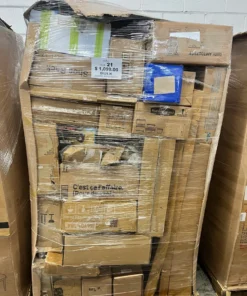
general merchandise pallets
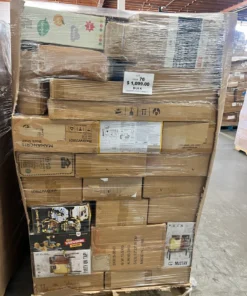
general merchandise pallets
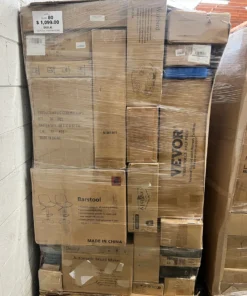
general merchandise pallets
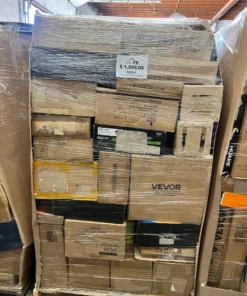
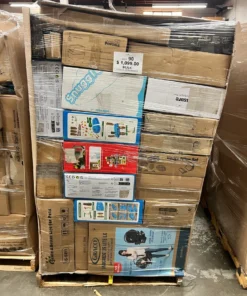
general merchandise pallets
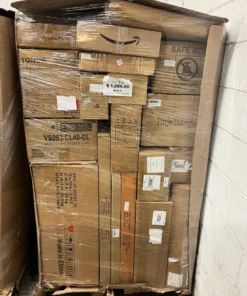
general merchandise pallets
Online Ordering Only
liquidationstockpallets.ca operates as an online-only liquidation supplier. There is no local pickup, no warehouse visit, and no in-store purchase option for standard pallet orders under any circumstance. The only exception applies to full truckload or multi-truckload orders, where pickup arrangements can be discussed directly with the logistics team by contacting sales@liquidationstockpallets.ca before placing the order.
Shipping to Canada and the United States
General merchandise pallets ship by freight carrier to buyers across Canada, with delivery arranged to the shipping address provided at checkout. Orders shipping into the United States are also supported. Buyers outside Canada are solely responsible for any applicable import duties, customs clearance fees, and tax obligations tied to their shipment. Every order is professionally freight packaged and shipped with tracking provided.
Why Buy General Merchandise Pallets From liquidationstockpallets.ca
liquidationstockpallets.ca sells general merchandise pallets directly online to buyers across every Canadian province and territory, with fulfillment extending into the United States, so a reseller anywhere in either market can place an order without needing a local warehouse or a regional supplier. Orders are placed through a straightforward online checkout rather than a bidding or auction process, which means the price shown is the price paid, with no last-minute bidding competition driving cost above what the lot is worth to the buyer. Every general merchandise pallet ships with professional freight packaging and tracking, and the online-only model keeps operating overhead focused on inventory and fulfillment rather than a physical storefront. Buyers dealing directly with liquidationstockpallets.ca work with one supplier for both Canadian and US-bound orders instead of coordinating separate cross-border sourcing relationships.
Frequently Asked Questions
What is included in a general merchandise pallet? A general merchandise pallet contains a mix of retail stock across multiple categories rather than one product type, which can include housewares, seasonal goods, toys, personal care items, and other everyday retail merchandise depending on the specific lot.
Are general merchandise pallets new or used? Condition varies by lot and can include new or overstock stock, shelf-pull stock, and customer return stock in the same pallet, since the category is defined by product variety rather than a single condition tier.
Is there a minimum order quantity for general merchandise pallets? General merchandise pallets are sold by the pallet, so a buyer can start with a single pallet order without committing to a truckload quantity.
Can I pick up my general merchandise pallet order in person? Standard pallet orders are online only with no local pickup or warehouse visit. Pickup is only available for full truckload or multi-truckload orders arranged in advance with the logistics team.
Do you ship general merchandise pallets to the United States? Yes, general merchandise pallets ship to the United States. Buyers outside Canada are responsible for any import duties, customs clearance fees, and taxes that apply to their shipment.
How long does shipping take within Canada? Shipping is handled by freight carrier to the delivery address provided at checkout, with timing depending on the buyer's location relative to the shipping origin.
Can I return a general merchandise pallet after purchase? Liquidation pallets, including general merchandise pallets, are sold as-is given the nature of returned and overstock inventory, so buyers should inspect stock promptly upon delivery.
Is a manifest provided with general merchandise pallets? Manifest availability depends on the specific lot listed for sale, and any manifest provided reflects the actual contents supplied for that lot.
What is the difference between a general merchandise pallet and a single-category pallet? A general merchandise pallet spans multiple product categories in one lot, while a single-category pallet, such as electronics or apparel, is built entirely from one product type.
Where can I resell items from a general merchandise pallet? Common resale channels include eBay.ca, eBay.com, Amazon.ca, Amazon.com, Facebook Marketplace, Kijiji, Craigslist, OfferUp, Poshmark, Mercari, and Bonanza, depending on the item type and the buyer's location.
Are general merchandise pallets a good fit for a first-time reseller? General merchandise pallets are commonly used by new resellers because the category mix allows testing multiple product types before committing to a specialized category, and per-pallet entry cost is typically lower than single-category electronics or appliance lots.
How do I place an order for a general merchandise pallet? Orders are placed directly online through liquidationstockpallets.ca. Buyers with questions about full truckload or multi-truckload orders can contact sales@liquidationstockpallets.ca before placing an order.
Legal Disclaimer
The information provided on this page is intended for general informational purposes related to the purchase of liquidation merchandise and does not constitute a guarantee of product condition, resale value, or profitability. All general merchandise pallets are sold as-is, and liquidationstockpallets.ca makes no warranty, express or implied, regarding the fitness of any item for a particular purpose beyond what is stated at the time of sale. Buyers are responsible for independently verifying compliance with any applicable resale, safety, or import regulations in their jurisdiction, including all duties, customs requirements, and tax obligations for shipments outside Canada. Profit and resale outcomes referenced on this page are illustrative of general market mechanics only and are not a projection or guarantee of actual results for any buyer.
liquidationstockpallets.ca
Email: sales@liquidationstockpallets.ca
Address: 724 Caledonia Rd, The Nation, ON K0B 1N0, Canada